
Maple, Done Properly from Tree to Plate – Why We Choose Honest to Goodness

There’s a big difference between something that tastes like maple… and something that actually is maple.
At Those Little Poffertjes, we’ve always chosen the real thing. Not a flavoured syrup, not a shortcut—pure maple syrup. It costs more, it’s harder to work with, and most people don’t realise the difference until they try it properly. But once they do, there’s no going back. That decision led us to sourcing through Honest to Goodness, because if you’re going to do maple, you may as well do it right and bring you a Canadian Grade A Dark Maple Syrup.

Maple syrup starts its life as sap drawn from maple trees—mainly sugar, black and red maples—grown in cold climates, predominantly Canada. Quebec alone produces more than 70% of the world’s supply. The sap itself is about 98% water, lightly sweet, and only flows under very specific conditions—cold nights and warmer days.
And here’s the part most people don’t realise: the season is incredibly short. Sap only runs for around 4 to 6 weeks each year, typically between late winter and early spring. As soon as the buds start to open on the trees, the sap changes and is no longer suitable for making high-quality syrup. It’s a race against time.
It’s also not something you can rush into. Maple trees aren’t tapped until they’re around 40 years old—and once they are, they can continue producing sap for up to 100 years.


The people who manage this process are called Sugarmakers. And it’s not a seasonal hobby—it’s a full-year commitment. They spend months maintaining their trees, repairing lines, clearing damage, and preparing for the short window when everything happens at once. When the sap starts running, it’s often around-the-clock work. Boiling, monitoring, adjusting—sometimes for days without stopping—just to turn that thin sap into something rich and stable.

Because turning sap into syrup is where the real transformation happens.
At the start of the season, it takes roughly 20 litres of sap to produce just one litre of maple syrup. A single tree might yield up to 12 litres of sap in a good day, but what comes out the other end is something far more concentrated—both in flavour and in value.
The process itself is simple, but not easy. The sap is collected, then boiled down slowly so the water evaporates, leaving behind a thick, naturally sweet syrup. No additives, no flavourings—just reduction. That’s what makes real maple syrup fundamentally different from anything labelled “maple flavoured.” What you’re left with isn’t just sweet—it’s complex.
There are over 90 recognised flavour notes in maple syrup—ranging from buttery and floral through to fruity and slightly spicy. That variation depends on the tree, the soil, the timing of the harvest, and even how the sap flowed that season. It’s not engineered consistency—it’s natural variation. That’s also where grading comes in.

Maple syrup is graded by colour and flavour. Lighter syrups, like Golden, are collected early in the season and have a more delicate taste. As the season progresses, the syrup becomes darker and more robust. The darker grades—like the A Grade Dark Organic maple we use—have a deeper flavour and typically contain higher antioxidant levels.
That’s why we use it. Not because it’s standard—but because it actually holds its own when poured over hot poffertjes.
Then there’s the part that usually surprises people. Because maple is sweet, it often gets lumped in with refined sugar. But nutritionally, it’s not the same thing. Pure maple syrup contains up to 24 naturally occurring antioxidants, which help reduce free radical damage and may play a role in lowering inflammation and the risk of chronic disease. It also carries minerals that refined sugars simply don’t have. A standard 60 ml serve delivers 72% of the daily recommended intake of manganese, along with riboflavin, copper and calcium.

It’s still a sweetener—but it’s one that actually brings something with it. It also has a relatively lower glycemic impact compared to refined sugar and contains no additives, no colouring, and no preservatives. Just reduced sap.
Over the years of serving poffertjes, I’ve heard just about every reason why people avoid maple—especially for kids.
Too much sugar. Too messy. They’ll get sticky hands.
And yes… all true.
But in avoiding it, they’re often swapping it for something that’s been stripped back to nothing but sweetness. No minerals, no antioxidants, no depth—just sugar.
Real maple isn’t just about taste. It’s about what it isn’t. It hasn’t been manufactured to behave a certain way. It hasn’t been flavoured to mimic something else. It’s simply reduced tree sap.
And the sticky hands? That’s part of it. Food should feel like something.
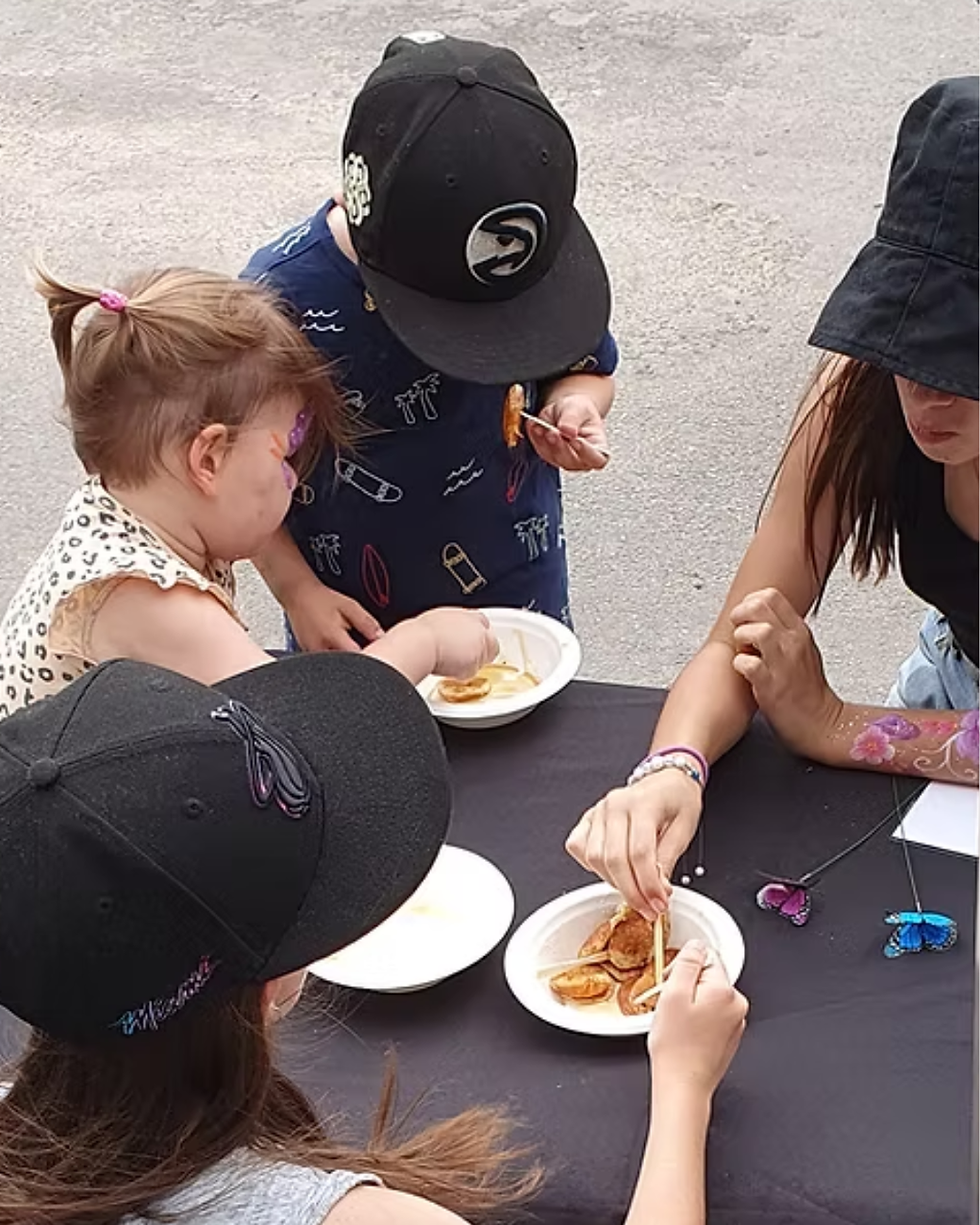
For us, using pure maple syrup isn’t a marketing angle. It’s just part of how we do things.
We use free-range eggs. We make our strawberry coulis ourselves. We choose real maple. And we trust suppliers like Honest to Goodness to source it properly, so we can serve it with confidence.
If you’ve only ever had “maple-flavoured” syrup, it’s worth trying the real thing properly.
Not dressed up. Not overcomplicated. Just warm poffertjes, fresh off the plate, with maple poured the way it’s meant to be. Lots of it and why not add some bananas or strawberries...

We also bring this experience to school events, with simple educational signage so kids can learn a little about maple while they wait for their poffertjes.
References:
Mainemapleproducers.com. "Nutrition: The 9 Health Benefits of Maple Syrup." https://mainemapleproducers.com/nutrition-the-9-health-benefits-of-maple-syrup/
Cbmaplefarm.com. "Maple Syrup Facts." https://www.cbmaplefarm.com/blogs/news/maple-syrup-facts


Comments